





Open Culture Foundation 2025 Annual Report

The Digital Future I See

To Citizens of the Digital Age

Digital technology is reshaping how each of us lives, thinks, and exercises our rights.

We invite you to look at the most urgent questions of our time through the eyes of a sixteen-year-old girl. The openness, freedom, transparency, and participation we have fought for are being hidden behind opaque code and algorithms. We seem to move freely through the digital world, yet our privacy, preferences, and even possible futures are increasingly defined by technical rules written by a small number of people.

The Open Culture Foundation (OCF) exists so that the rules governing technology can be put back in the hands of every digital citizen.

Over the past year, we have put openness into practice on the front lines. We promoted the idea of Public Code, urging government agencies to adopt open-source software and avoid vendor lock-in. Through the Open Tech Garage and our digital security support program, we helped civil society build stronger defenses. We also joined discussions on digital rights legislation, so privacy and freedom would not become the price of technological progress.

As the rise of AI sharpened debates over training data, safety, and privacy, OCF went to the Legislative Yuan to help advance guidelines for parliamentary use of AI. We also joined multiple Ministry of Digital Affairs meetings on responsible government use of AI, personal data protection, and creators' rights. We believe transparency and sharing offer the best path through today's digital problems. AI should serve society as a public good, not grow into a tool without accountability.

OCF works toward a genuinely open and transparent digital future. In that future, open-source code, open data, and open government allow everyone to participate as equals and defend their own rights. We sincerely invite you to stand with OCF, help us build better digital lives, and keep the power to decide the future firmly in people's hands.

Signature of the Chief Executive Officer

Hi, I'm Glad We Met Here
A few thoughts about the world we live in

Growing up in Taiwan, I saw more and more of life turn into combinations of 0s and 1s. We chat on social media, shop online, search the web for knowledge, and now handle all kinds of daily errands through screens. As I grew older, I saw that the physical world has long-established laws and social systems that quietly maintain and adjust its order. The digital world we inhabit feels much younger, almost as young as I am, and still uncertain in many ways.

I do not want the digital world of the future to become a giant black box filled with invisible surveillance and manipulation. The future I hope for is transparent, open to public debate, and written by everyone who lives in it.

The bridge to that digital world is still being built, and it needs more people paying attention. So please follow my point of view and see how the Open Culture Foundation has fought for the digital freedom of my generation this year.

Running a Relay With Developers Around the World

I first learned about OCF and its work because I wanted a hot bowl of braised pork rice from the school co-op.

We are already a quarter of the way through the twenty-first century, and my school co-op still does not have an online meal-ordering system. Every lunchtime, everyone waits in line, and by the time we get our lunch, half of the break is gone. Facing the same awkward situation day after day, I suddenly wondered: after all those computer classes, why not write an ordering app everyone could use?

I hit a wall almost as soon as I started. Payment flows and authentication systems were far beyond the level of a sixteen-year-old student. Then I opened GitHub and stepped into the world of open source. There, I found an ordering system template shared by a senior student. The best part was that it was not locked behind “all rights reserved.” It welcomed reuse and collaboration.

I stood on someone else's shoulders, modified the code for my school, and even sent my version back to GitHub to help another student club. At that moment I understood something important: when technology is not locked inside a black box, we do not have to rebuild everything from scratch. This must be the “collaboration” OCF keeps talking about. It felt like running a relay with developers online, where my contribution could become the next person's foothold. Open source is public infrastructure for the digital world.

If a high school student can use open-source ideas to solve a lunch problem on campus, what about the wider society? What digital bridges did OCF build this year through open technology, including open source, open data, and open government?

A girl observing open technology and open-source collaboration

01 Open Technology

Open Source Is Public Infrastructure for the Digital World

In the digital world, the software and services we use every day are like the foundation of a building. OCF's work on open technology this year focused on making sure that foundation remains reliable, secure, public-minded, and not captured by monopolies.

Guardians of the software supply chain: advancing OSPO governance and international coordination

Open-source software sits at the core of how governments and companies operate. Using it well and managing it responsibly requires practical knowledge. This year, OCF turned complex governance ideas into tools that organizations can actually use.

Gatekeepers of digital sovereignty: Public Money, Public Code (PMPC) and local implementation

OCF has long advocated for open source and worked to make it practical inside government agencies, so code serving the public interest can truly be governed by the public and its democratic institutions.

  • Helping Taipei City Government develop open-source adoption assessment guidelines: OCF carried out two open-source alternative assessments for server virtualization and database software, accelerating public-sector adoption of open-source solutions.
  • Localizing international standards: OCF completed the Traditional Chinese translation of Standard for Public Code version 0.8.1, helping Taiwan's Public Code work align with international technical standards.
  • Working with the Ministry of Digital Affairs to build policy dialogue: OCF helped organize four working group meetings on the ministry's Public Code commitments, bringing civic communities, technology companies, and government officials together to discuss the next steps for public-interest software.

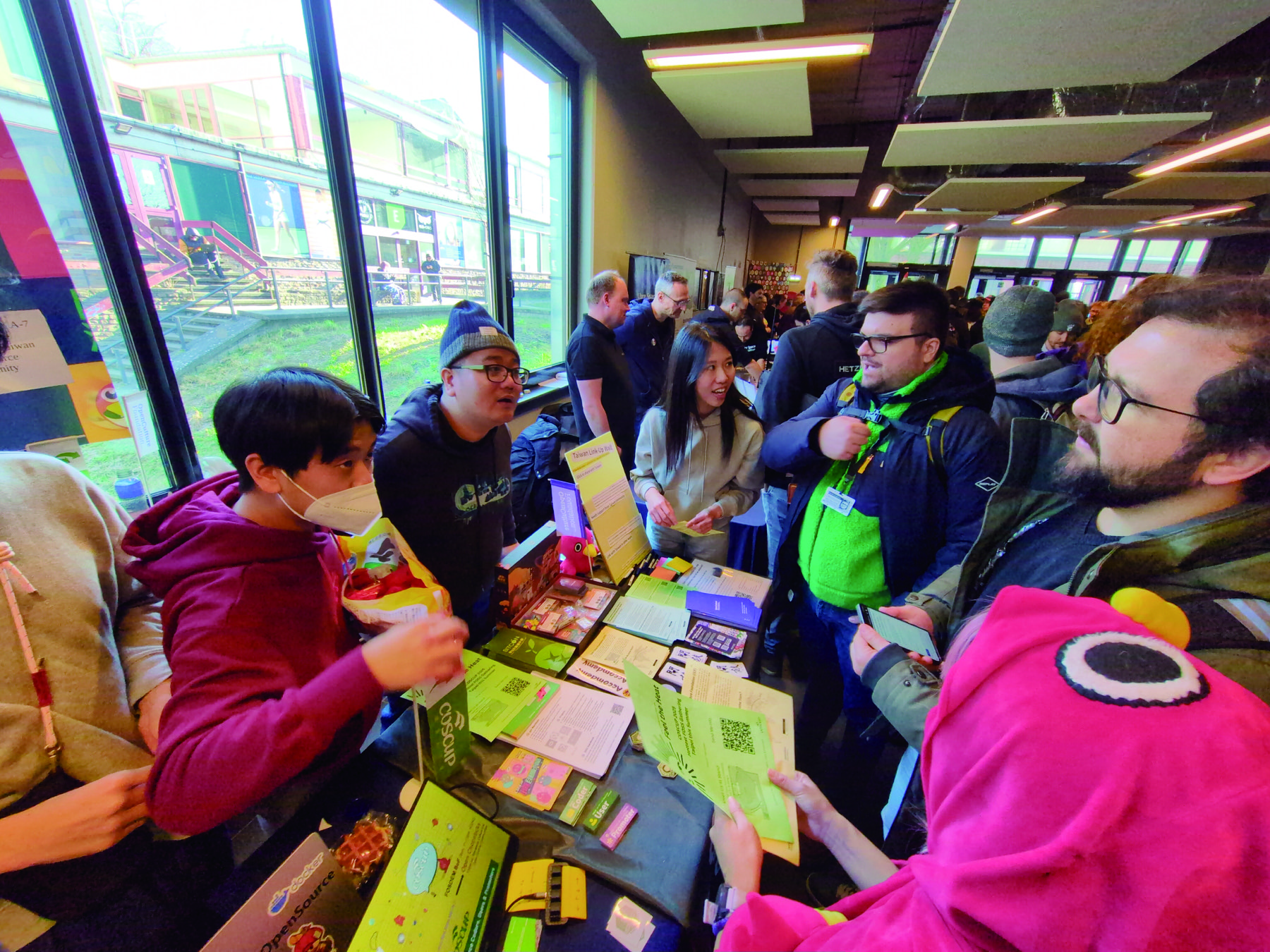
Introducing Taiwan's open-source projects to European open-source communities at FOSDEM
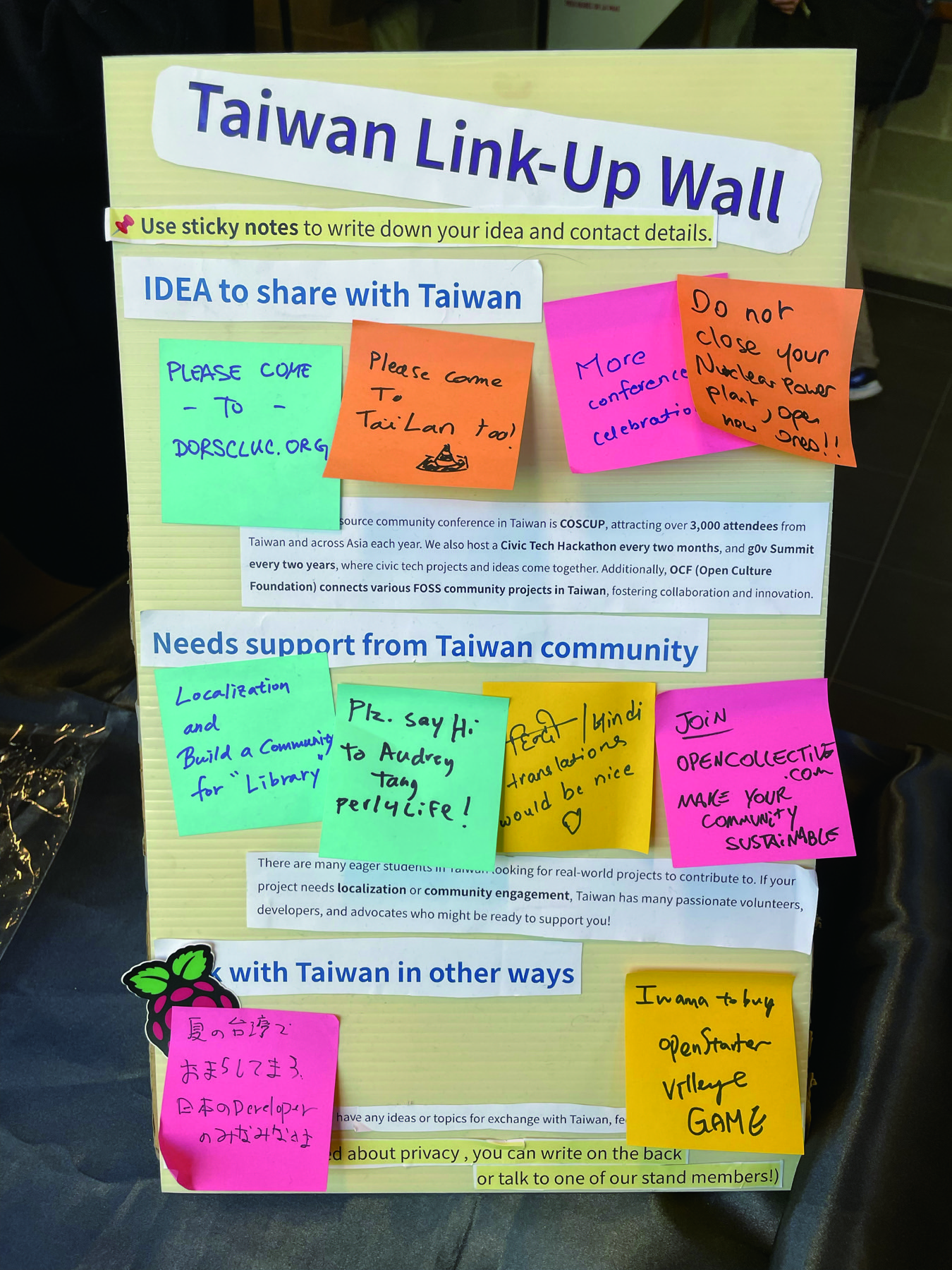
Using a message board to encourage exchange between European and Taiwanese open-source communities

Notes

I used to think “open source” just meant people getting together to write free software. After reading OCF's Good Governance Initiative handbook and learning about Public Code, I realized that open source is also a movement about rights.

If government code is not transparent, we cannot oversee it. If human rights groups lack secure open-source tools and basic digital security guidance, people will have a harder time speaking up. OCF is like a bridge builder in the digital world, making sure every stone under our feet is transparent and safe.

I Want to Know What We Are Eating

My ordering app officially launched. My classmates loved it, and the school even gave me a minor merit award.

As more people bought meals from the co-op, I started to wonder why some dishes always sold out and whether the ingredients were really safe. I asked the school for three years of food procurement data, hoping to turn it into charts that everyone could review. The student affairs director said the data was internal and unavailable for public release. In the end, I only received a PDF that was hard to analyze with code.

That was the first time I felt the frustration of opaque data and understood why open data matters. If even school co-op data is this hard to get, or if the data arrives in a format that machines cannot read, how can ordinary people see the full picture of government budgets, environmental monitoring data, or the progress of legislation?

Only then did I understand why OCF works on open data and open government in addition to open source. Non-sensitive data related to daily life should not be a secret locked away on a public-sector hard drive. Every citizen should have the right to access and oversee it. Without transparent data, “public participation” becomes a blind search through fog.

So I decided to keep going and use OCF's advocacy methods and communication strategies to knock on the door to the truth.

A girl observing open government and open data

02 Open Government and Open Data

Data Should Not Be a Secret Locked on a Government Hard Drive

Over the past year, OCF played the roles of advocate and educator. We worked inside institutions to advance legal foundations and also brought open culture into parliament and schools.

Opening the center of power: building a smarter and more open government and parliament

As AI reshapes public decision-making, is the parliament that makes national laws ready? OCF continued to promote more transparent and digitally capable parliamentary and government operations, making open government more possible.

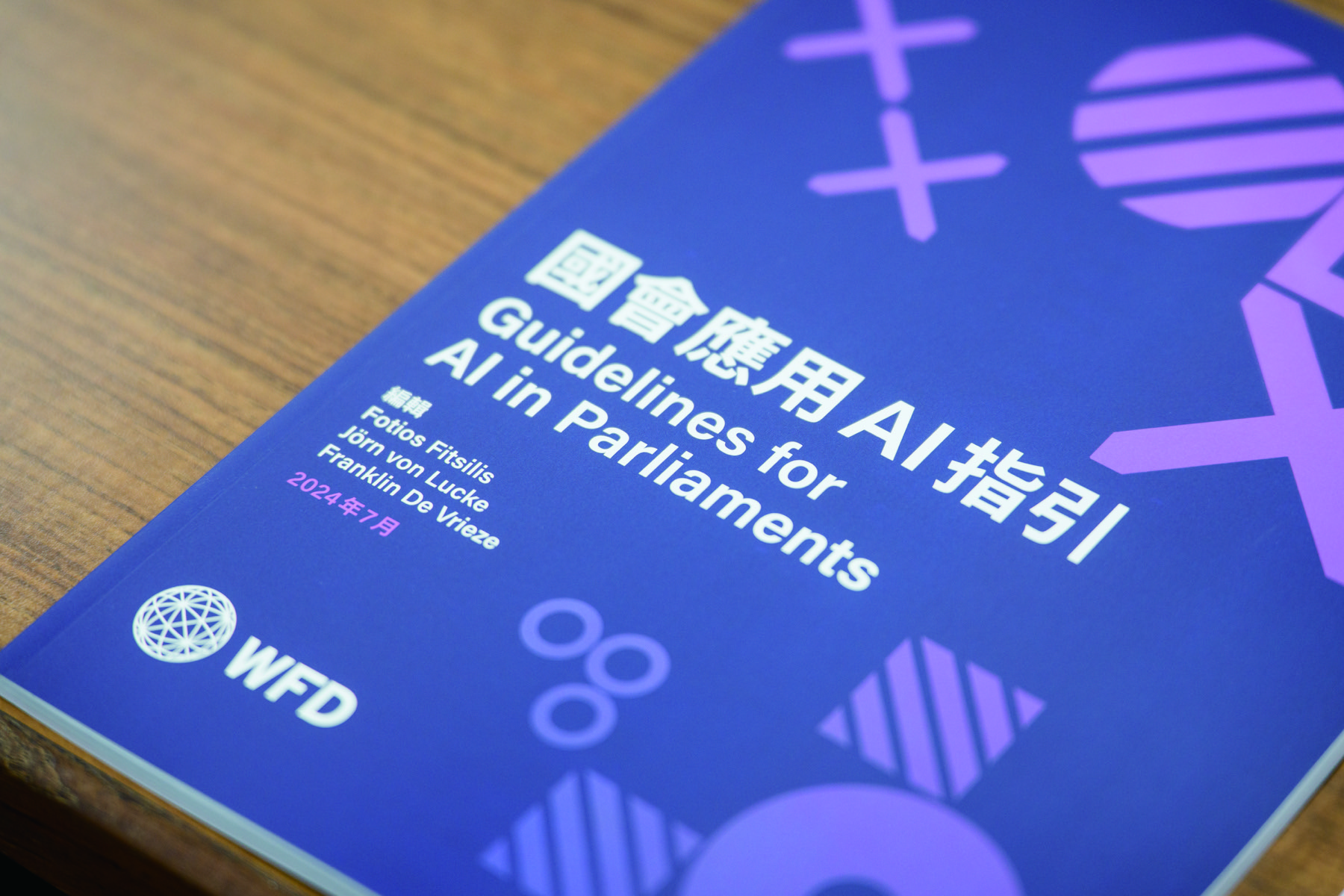
  • Guidelines for parliamentary use of AI: OCF worked with the Westminster Foundation for Democracy (WFD) to hold “When Parliament Meets AI: Launch of Guidelines for Parliamentary Use of AI” at the Legislative Yuan, discussing responsible AI use and how technology can safely support decision-making.
  • Reconnecting open parliament stakeholders: OCF and WFD held a closed-door discussion, “The Next Step for Open Parliament,” at the g0v community space, reconnecting the community and keeping open parliament commitments in conversation.
  • Turning action into dialogue: OCF served as a member of the Executive Yuan Open Government National Action Plan task force, continuing to bridge communication across ministries.
  • Embedding open government in public service: OCF helped the Ministry of Justice run training for Grade 9 ethics officers, bringing open government concepts into daily public-sector work.

Building open foundations: from legislation and collaboration to global connection

Open data needs strong legal foundations. OCF took part in policy consultations to make sure the law serves people and protects rights, not only technology.

  • Supporting inter-ministerial collaboration: OCF served on ministry-level open data advisory committees for the Veterans Affairs Council, Mainland Affairs Council, and Ministry of Culture, helping agencies develop practical open data practices in the AI era.
  • Legislative advocacy and impact assessment: OCF joined multiple civil society consultations and stakeholder meetings on the draft Act for Promoting Data Innovation and Use, and provided professional input on human rights impact assessment.
  • Advancing openness through international organizations: OCF served as a user research and consultation partner for the Open Knowledge Foundation's Open Data Editor, sharing local advocacy experience.

Bringing open courses to campus and training future digital citizens

Open culture should not stop at technical communities. It should become basic cross-disciplinary literacy and part of capacity building for public agencies and nonprofit organizations.

  • Spreading open source into schools: Through a mix of topics and venues, OCF delivered six lectures at Soochow University, National Taipei University, National Yang Ming Chiao Tung University, and other campuses, covering open data, AI digital creation, digital rights, and social responsibility.
  • Basic literacy for digital citizenship: OCF shared global trends in digital public goods at the National Museum of Taiwan History and helped Hong Kong Outlanders learn how to use AI responsibly for public expression.

Repairing data quality: civic tech in practice

Open data must be useful, not merely available. OCF worked with the Aimosheng Foundation(愛陌生協會) to improve the quality of AED open data through civic tech, so high-quality open data can truly save lives when it matters.

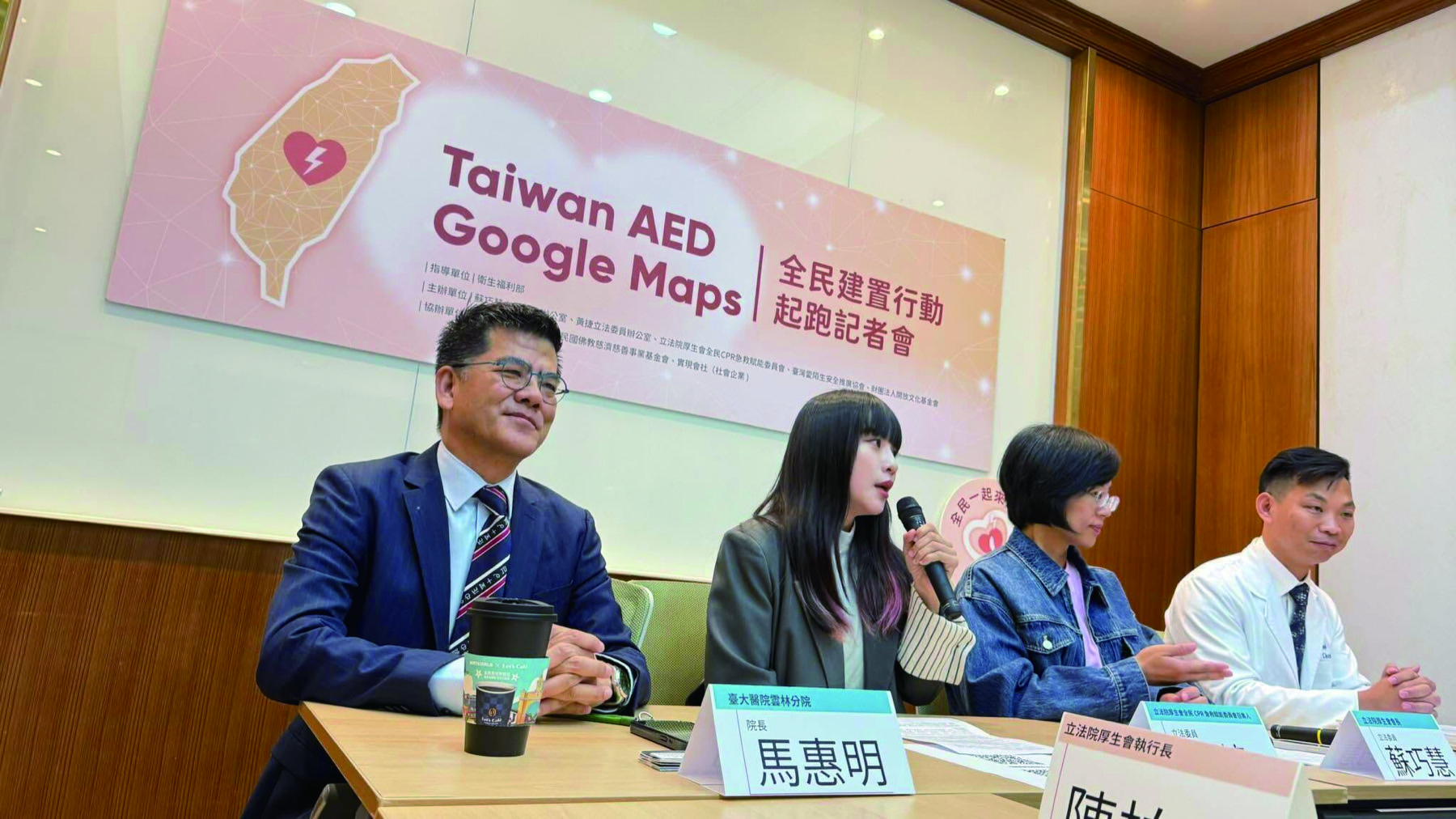
Press event for the Taiwan AED Google Maps public mapping initiative
Press event for the Taiwan AED Google Maps public mapping initiative. Photo: Deng Tung-Po
Guidelines for parliamentary use of AI
Guidelines for parliamentary use of AI. Photo: Westminster Foundation for Democracy

Notes

I used to think open data simply meant putting files on a website. Later I learned that open data has requirements and quality standards. If formats are not machine-readable, or if the law does not clearly require government agencies to open data, people still cannot use it.

Seeing OCF go to the Legislative Yuan, the Executive Yuan, and university classrooms helped me understand that “openness” is a long-distance race against time. The work with the Aimosheng Foundation(愛陌生協會) to improve AED map data was especially cool to me. When data becomes transparent and accurate, it stops being a stiff file on a hard drive and becomes real support that can protect people.

Who Is Watching Me Behind the Algorithm?

After months of communication and friction, the school's food data became more complete, and the app improved with advice from more experienced developers.

Then, just as the ordering system became more popular, something chilling happened. I found out that a catering company with a long-term relationship with the school had written privately, hoping I would “authorize” them to use students' ordering preferences, allergy records, and even daily schedules as marketing data.

Of course I refused. But the incident made me realize that in an age where everything is connected, every casual digital footprint and every everyday action converted into 0s and 1s can become a currency traded quietly between companies. Under the friendly surface of technological convenience, our privacy is becoming dangerously fragile.

This is the digital rights front line OCF defends. In the shadow of pervasive commercial surveillance and possible AI abuse, we urgently need stronger rules that protect personal data and digital rights. I do not want the digital life of the future to trade on our personal information.

That night, I checked the source code line by line and removed every unnecessary tracker. Protecting my classmates' personal data meant protecting their basic human dignity.

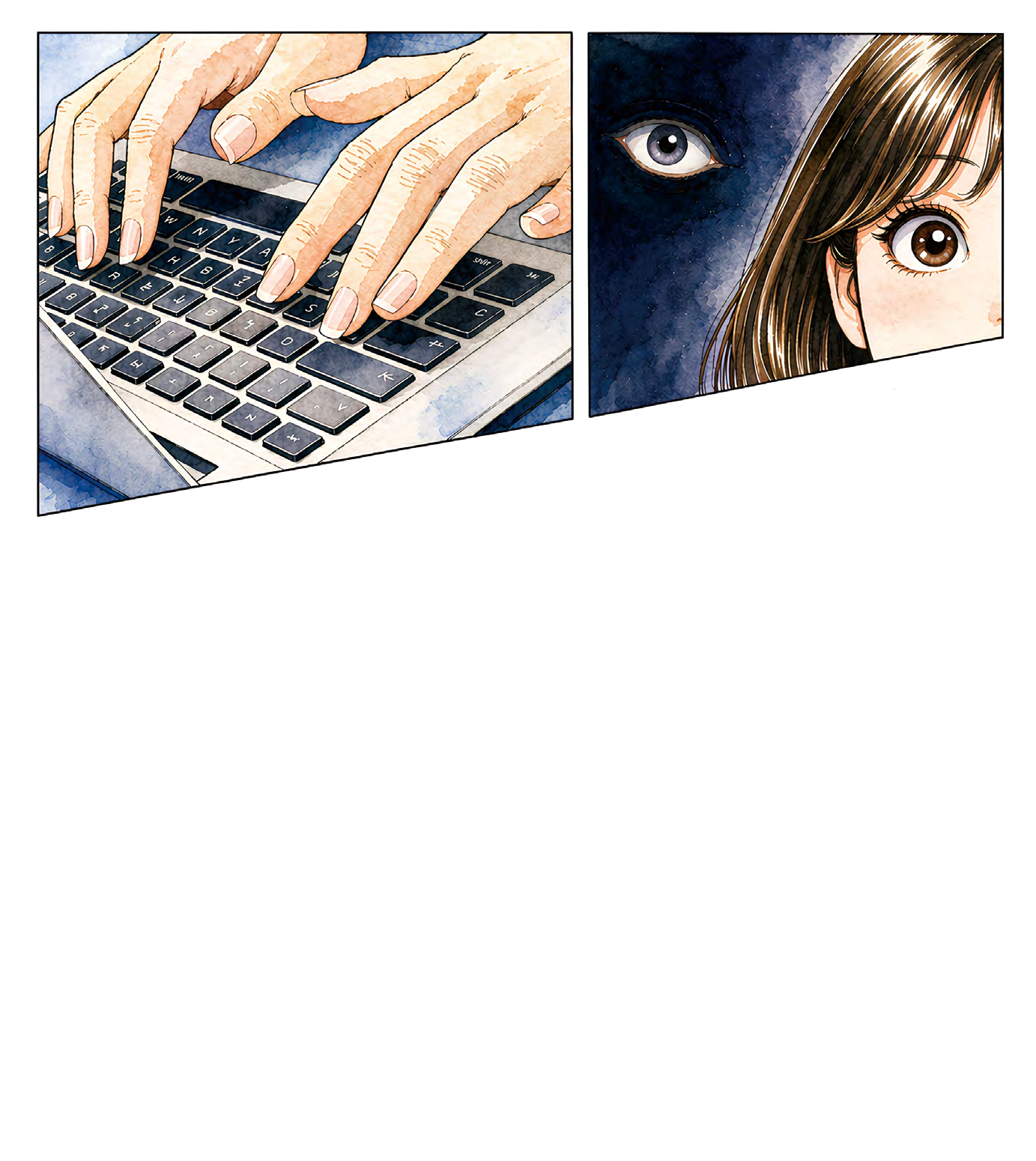
A girl facing digital rights and privacy risks
Illustration detail of a keyboard, gaze, and personal data surveillance

03 Digital Rights

Freedom in the Digital World Is Not Guaranteed

Over the past year, OCF protected citizens' privacy and freedom of expression through international engagement and local community work.

The digital front line of international advocacy: bringing Taiwan's experience to the world

Threats to digital rights are global. OCF joined major international gatherings to make sure Taiwan has a place in digital governance conversations across the Asia-Pacific region and beyond.

  • Digital Rights Asia-Pacific Assembly (DRAPAC): In Kuala Lumpur, OCF introduced its 12-month digital security support program and exchanged experience with international partners working on digital rights and technology, discussing how to support advocates in high-risk environments.
  • Global Privacy Assembly (GPA): At a forum in Seoul, OCF shared Taiwan's civic community contributions to privacy and digital rights protection.
  • Asia Democracy Assembly: At one of Asia's most influential democracy gatherings, OCF analyzed Taiwan's defense strategies against cross-border digital attacks and examined authoritarian tactics.
  • Global Gathering: In Portugal, OCF connected Taiwanese and global digital rights organizations and practitioners, exchanging the latest trends in digital rights in Taiwan and around the world.

RightsCon 2025 came to Taiwan for the first time

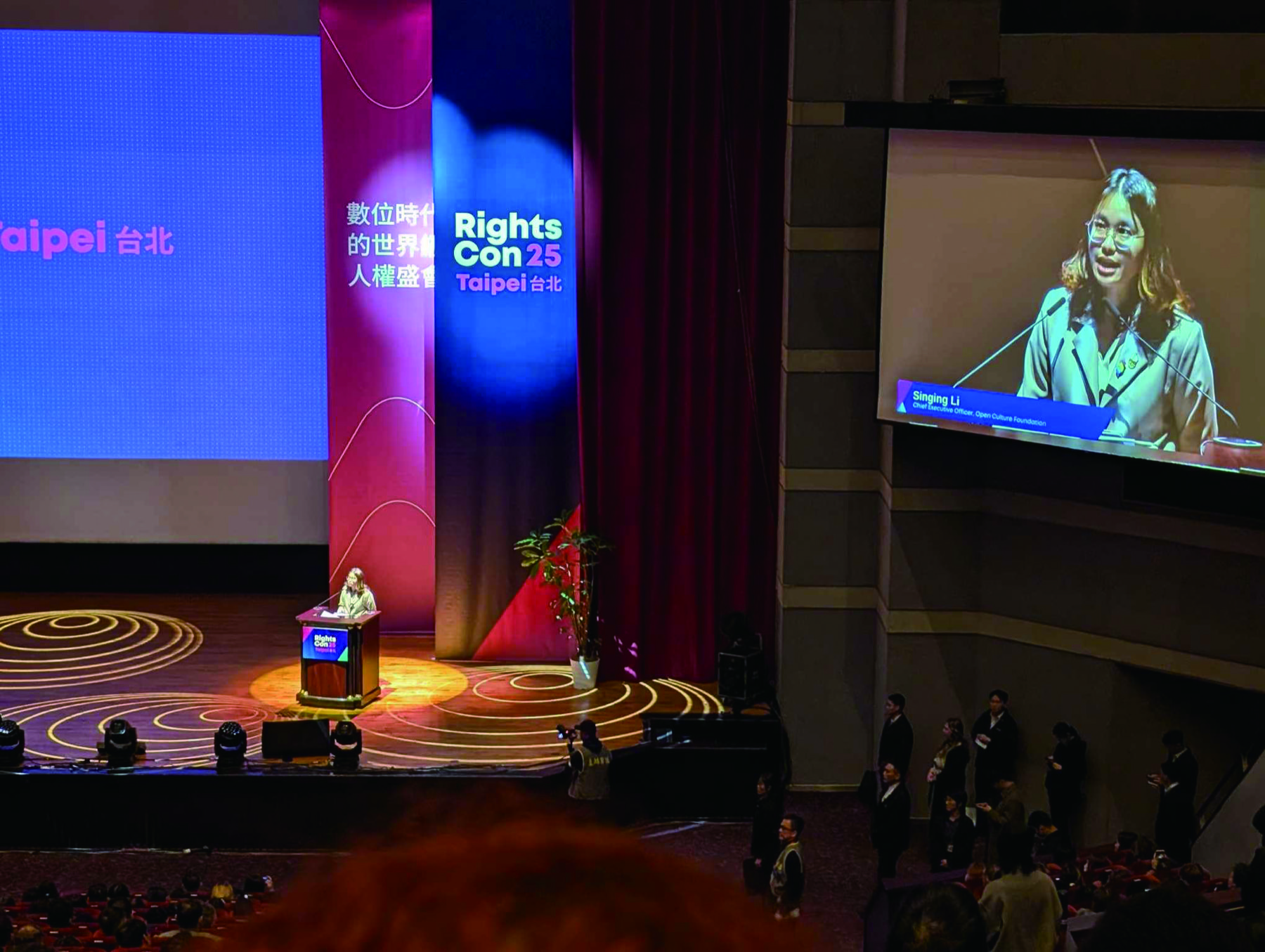
In 2025, RightsCon, the global digital rights conference hosted by Access Now, came to Taiwan for four days at the Taipei International Convention Center. As the local partner for RightsCon 2025, OCF worked directly with developers and researchers from around the world and connected Taiwanese NGOs to identify human rights strategies that can be put into practice.

  • Workshops on internet freedom, censorship, and anonymity: During RightsCon, OCF organized an internet freedom workshop and invited Tor Browser, the privacy-focused operating system Tails, and the global network measurement organization OONI to Taiwan. Taiwanese developers were able to exchange directly with international teams on detecting network blocking, resisting digital surveillance, and keeping information flows from being maliciously disrupted.
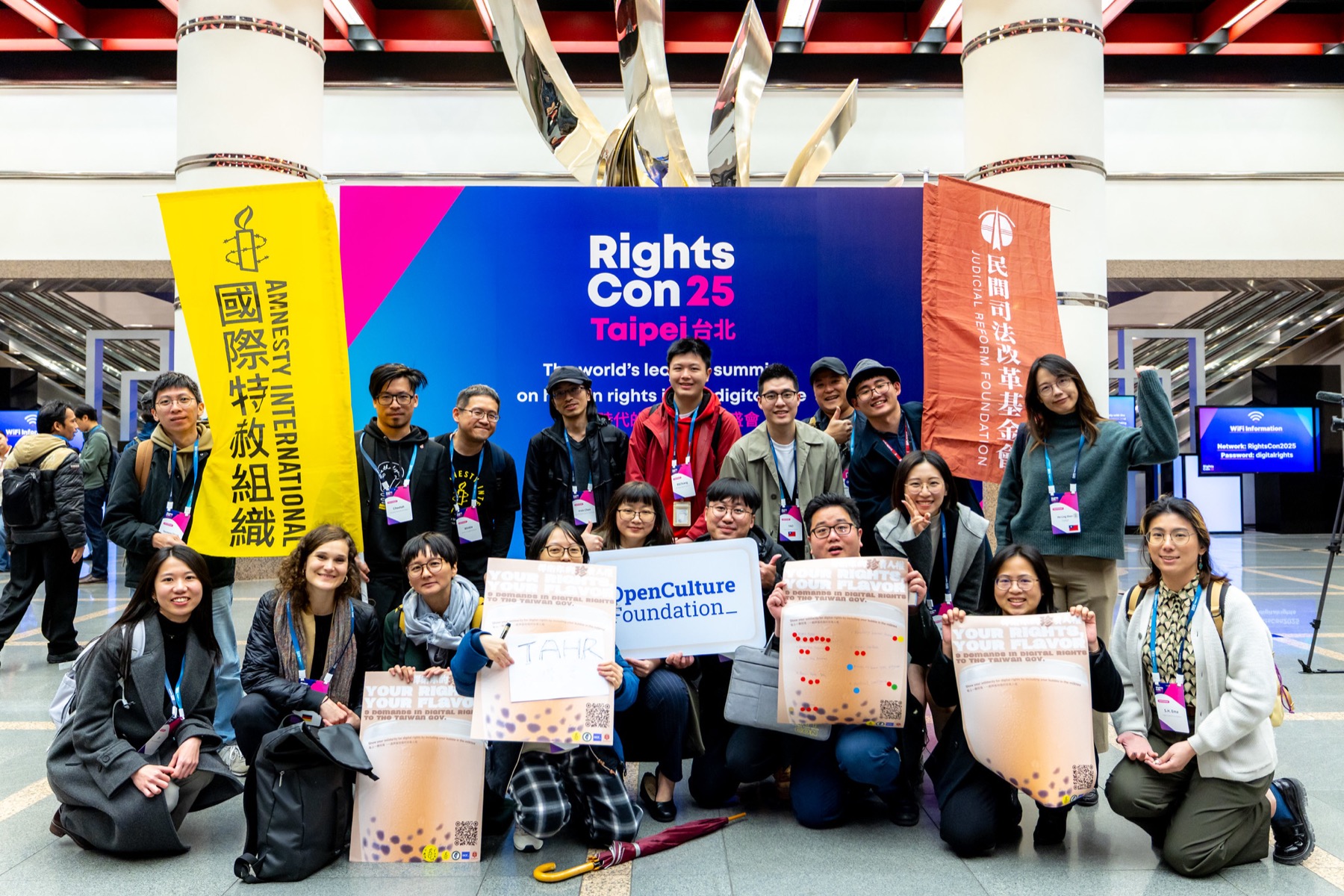
  • Nine demands with civil society partners: OCF joined the Judicial Reform Foundation, Taiwan Association for Human Rights, Amnesty International Taiwan, and other civic groups to issue a joint statement with nine core demands on AI governance and digital rights, urging the government to follow through on openness and transparency under international attention.

Digital Security Support Program: defenders should not stand alone

Civil society organizations (CSOs) and human rights defenders (HRDs) are often targets of cross-border digital attacks by authoritarian governments. To keep organizations from facing malicious threats alone, OCF launched the Digital Security Support Program in 2024, offering one year of practical support to strengthen the digital defenses of CSOs and HRDs.

  • Sharing real attack cases: OCF invited security analysts from the Taiwan cybersecurity volunteer community CSCS to break down targeted phishing attacks discovered during the program, helping civil society learn from real incidents and defend against digital authoritarianism.
  • Cross-disciplinary dialogue: In the Open Source Security track co-organized by COSCUP and HITCON in 2025, OCF shared field observations from its work with civil society groups and helped match open-source technical capacity with CSO needs.

Fighting for key rights: law and governance under pressure

  • The right to opt out of secondary use of National Health Insurance data: After ten years of litigation and advocacy, the opt-out mechanism for secondary use of the National Health Insurance database officially launched in August 2025, protecting people's right to decide how their health data is used.
  • Advocacy on the Executive Yuan Human Rights Action Plan: OCF argued that digital rights protection needs more open and transparent public oversight. We proposed three demands, calling on the government to create multi-stakeholder participation mechanisms, strengthen inter-ministerial coordination, and govern the internet more transparently.

OCF CEO speaking at RightsCon 2025
OCF and Taiwanese civic groups issuing a joint statement on AI governance and internet freedom
OCF and Taiwanese civic groups issuing a joint statement on AI governance and internet freedom. Photo: RightsCon

Notes

Digital security is not only about avoiding suspicious links, and digital rights are not limited to whether the police abuse their power. Through OCF's participation in these international conferences, I learned that digital rights touch almost every corner of modern life.

Many of these issues do not happen only in Taiwan. OCF went to Malaysia, South Korea, and Portugal to share Taiwan's cases and bring back digital defense experience from abroad. They made me feel that even though digital authoritarianism looks enormous, we are not alone as long as people keep defending this line.

The Blood Vessels of the Digital World

One ordinary afternoon, while the whole school was voting on next week's menu, the internet suddenly became painfully slow.

It was not only our school. The entire area was experiencing unusual lag. At first, I thought the telecom provider had a short outage. Then I checked the news and was shocked to learn that a major disconnection could also be caused by a break in submarine cables. Matsu experienced submarine cable breaks a few years ago, bringing serious inconvenience to local residents. If cables around Taiwan deteriorated or were damaged, the impact would be hard to imagine.

That unexpected outage made me realize how important the internet is to life for my generation, and that a smooth connection is not guaranteed. I thought of OCF's work on internet freedom. Democratic Taiwan currently faces relatively little internet censorship or deliberate shutdowns by the government compared with some countries, but as an island, Taiwan's resilience remains fragile. If submarine cables or base stations are disrupted, or if geopolitical conflict cuts them off, our everyday digital lives could be forced to stop.

Internet freedom includes the freedom to connect, speak, and avoid censorship. I finally understood why OCF pays attention to both internet freedom and infrastructure. They are protecting freedom of expression on our screens and the submarine cables that keep a democratic society running. Without an open and functioning internet, all the ideals we build could be washed away by a single wave.

A girl seeing network outages and internet freedom issues

04 Internet Freedom

Internet Freedom

As authoritarianism spreads through digital tools, internet freedom also includes network resilience and the freedom to speak without surveillance. OCF works to strengthen Taiwan's digital resilience and introduce open-source anti-censorship technologies and trends.

Stress-testing digital resilience

Internet freedom is not abstract. Beneath the sea, submarine cables carry the traffic of the digital world, and their vulnerability has only recently become widely understood. This year, OCF continued to prepare for emergencies through monthly Internet Freedom Meetups, community discussions, and technical research.

  • Defending against large-scale outages: At Internet Freedom Meetups, OCF and experts discussed alternative communication options during major outages, including the Hermes Project's resilient communication technology and Winlink radio communication, so civil society can maintain basic rescue and information flows when submarine cables are damaged.
  • Learning from international experience: A discussion on national security and digital rights drew lessons from Ukraine's experience maintaining communications under conflict, and explored possible strategies for Taiwan.

Opposing digital censorship and defending freedom of expression

In response to legal amendments affecting user-generated content (UGC), OCF used Internet Freedom Meetups to bring experts, academics, civil society groups, and government agencies together to discuss possible solutions. We also reminded society that better regulation needs broad discussion and complete implementation measures. Heavy-handed fines can create a chilling effect, push platforms toward broader pre-screening, and harm people's freedom of expression online.

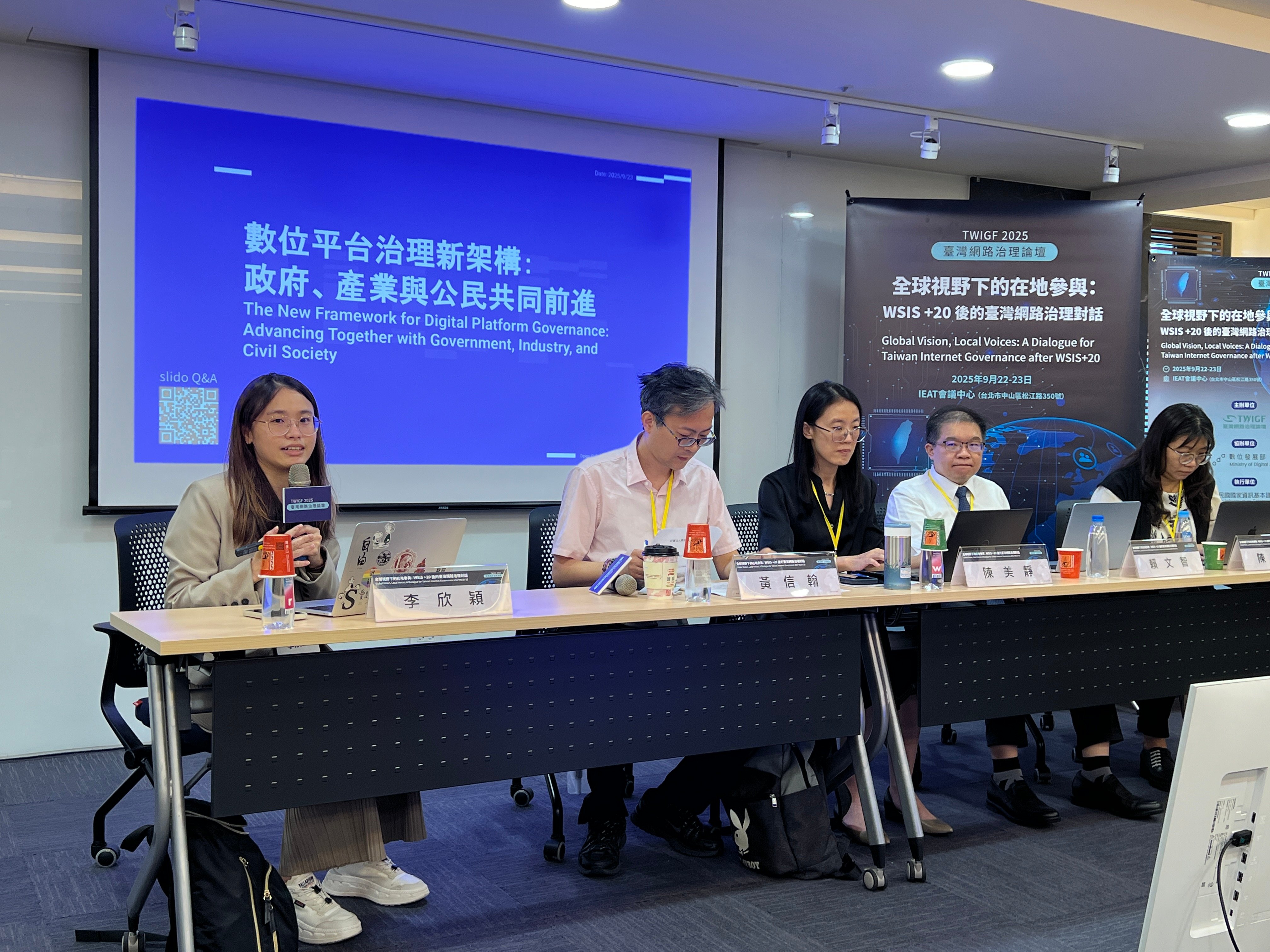
Participating in the 2025 Taiwan Internet Governance Forum and sharing on digital platform governance
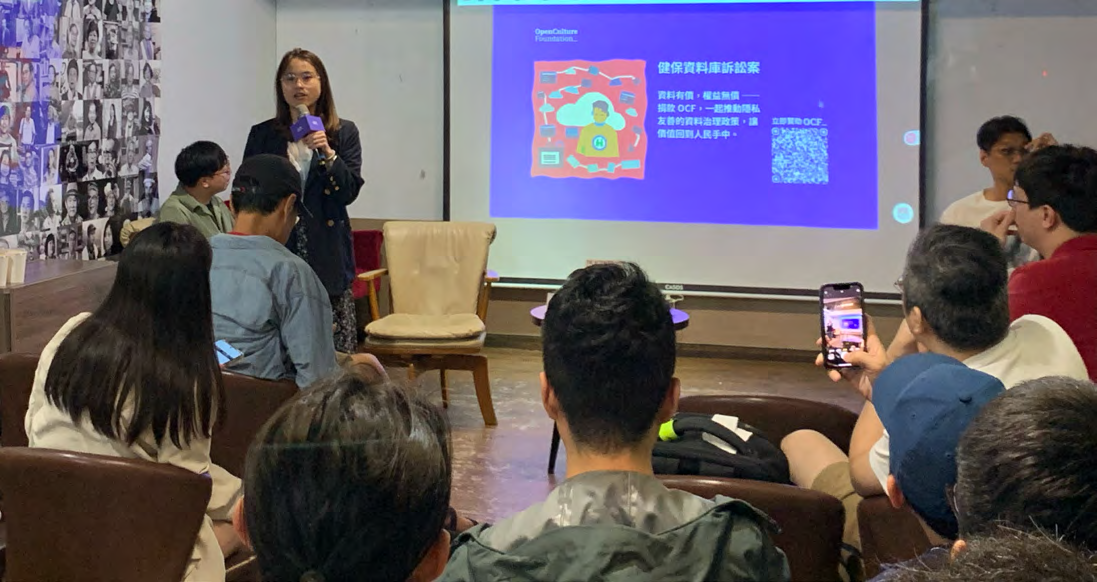
OCF discussion event on cloud data and privacy
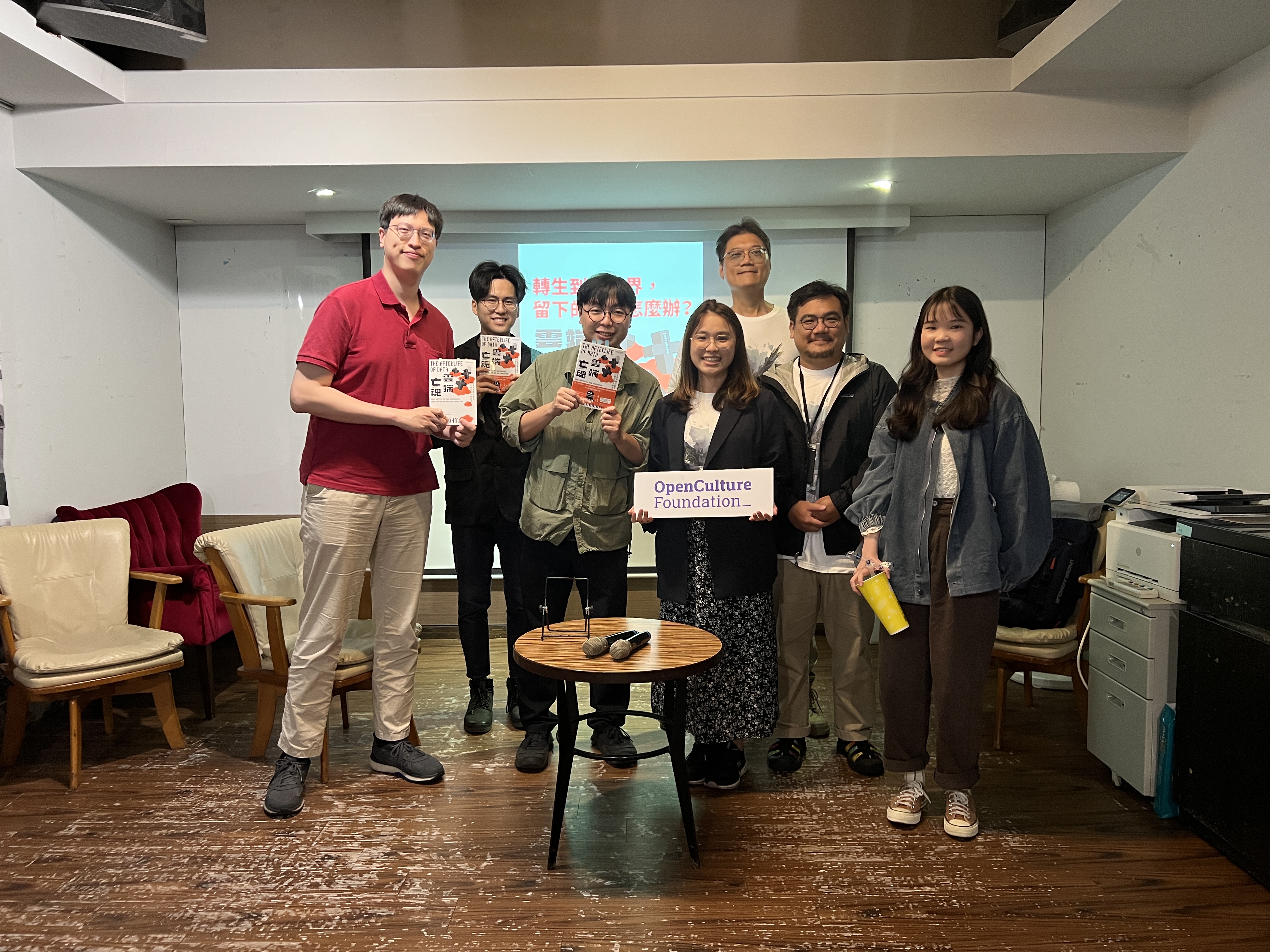
Bookstore talk for Cloud Ghosts

Notes

When the internet goes down, it affects much more than streaming shows or scrolling on a phone. Basic needs can also run into trouble. Seeing OCF discuss backup mechanisms for outages made me realize how fragile the internet really is.

Over the past year, I saw OCF partners travel around the world to exchange Taiwan's work and experience in internet freedom and digital rights with experts. In Taiwan, where internet access feels as constant as oxygen, internet freedom is still not a familiar issue for many people. Continued advocacy and discussion can help more people notice potential risks and start looking for solutions earlier.

Alone You Go Fast, Together You Go Far

A semester passed quickly. My ordering system became popular at school and even caught the attention of other schools.

OCF invited me to bring the project to an international open-source conference. There, I met young developers from different countries. Some used open hardware to solve water supply problems in Africa. Others worked on digital voting systems in Europe. Standing among people who cared about similar things, I realized I was no longer the girl sitting alone in front of a screen, feeling powerless before a huge system. When we gather our experience and code, community energy can carry us farther.

At those exchanges, we shared the digital challenges we faced and felt the steady momentum of open-source communities. I think this is why OCF works so hard on community building. They are not only promoting technology. They are weaving a vast network of support.

Through visits and international exchange, OCF connects Taiwan's open-source energy with the world. I finally understand that the key to a better digital future is passed among communities willing to share knowledge and collaborate. One person may move quickly, but a group of friends with a shared purpose can go much farther.

A girl observing collaboration in open communities

05 Open Community Building

Technology Changes, but Community Spirit Carries On

Since its founding in 2014, OCF has served Taiwan's open-source communities by supporting administration and finance so communities can focus on their own development. Through talent cultivation, educational innovation, and cross-disciplinary experiments, OCF also expands the influence of Taiwan's open-source communities.

Advancing the OSCVPass project for open-source talent

Building on long-term analysis of open-source contributors, OCF was invited to work with the Administration for Digital Industries and the Institute for Information Industry on an AI technology meetup pilot for open-source mentorship. The pilot reviewed open-source contributions in AI-related technical communities and explored sustainable ways to support industry-relevant open-source talent.

OCF also established OSCVPass, a fast-track feedback mechanism that offers priority entry or ticket discounts to long-term open-source contributors at major conferences such as SITCON and COSCUP. It is more than a ticket. It is practical respect for the spirit of collaboration.

OpenStarTer Village reaches broader education settings

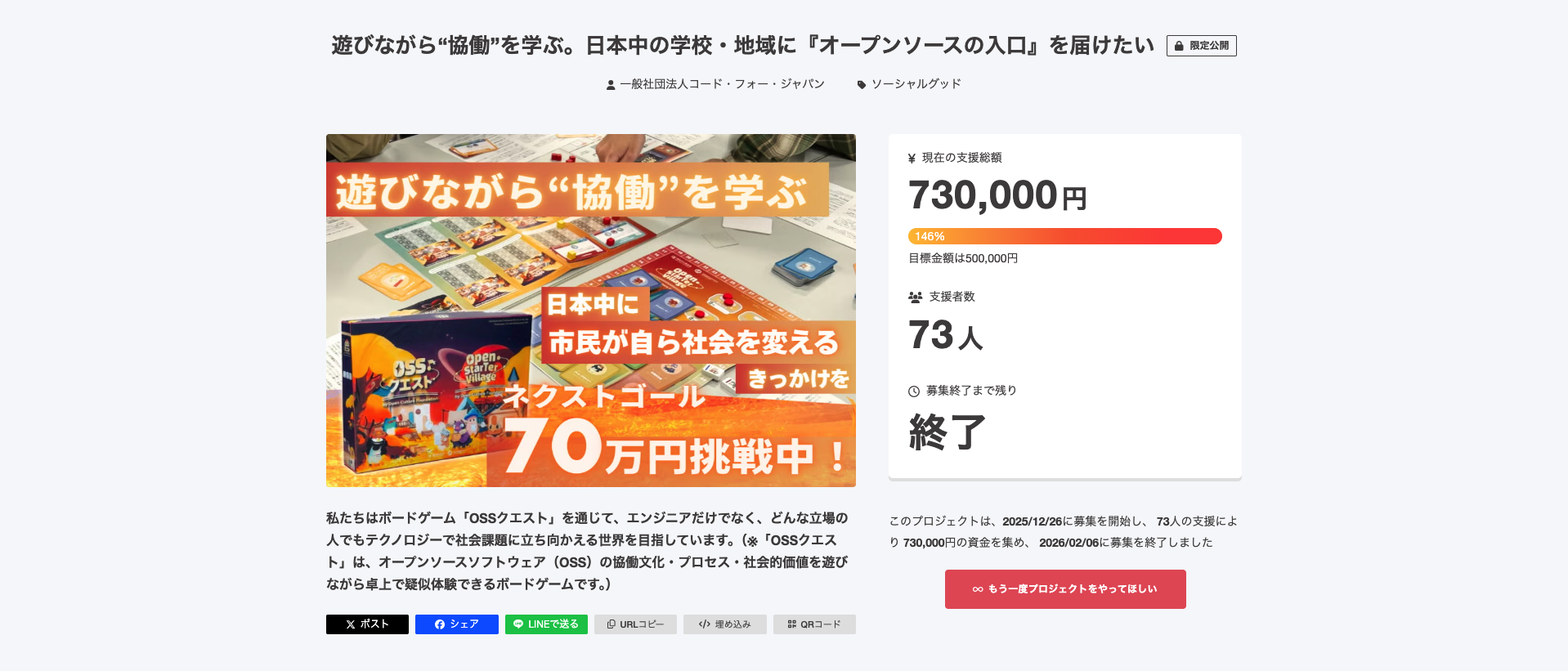
OCF independently developed the open-source education board game OpenStarTer Village, turning complex open-source project concepts and collaboration processes into a playable experience. It is paired with learning sheets on terms of use and practical activities on open data for AI. After continuous course refinement, the board game and lesson plans were selected for CommonWealth Parenting's 2025 Education Innovation 100.

This year, OCF brought open technology concepts to National Taiwan Normal University, National Kaohsiung Normal University, and junior college campuses through four in-depth interactive workshops. The Japanese community Code for Japan also forked a Japanese edition and launched crowdfunding, bringing Taiwan's open-source education experience to the international stage.

Cross-cultural experiments in sharing: from Bioerosion to Sun Moon Darkness

Through openly licensed music, OCF shows that open culture is not limited to information technology. It can also help music, images, and other creative fields flourish. In 2024, OCF worked with Lim Giong and Luca Bonaccorsi to release the album Bioerosion under CC BY-SA 4.0. In 2025, OCF launched crowdfunding for a second CC-licensed album, Sun Moon Darkness, with Mong Tong and XTRUX.

The album's audio and source materials are fully open under public licenses. Anyone can freely remix, sample, and even use them commercially with attribution, returning musical sovereignty to the public.

Twenty years of continuity: COSCUP 20th anniversary open-source policy track

At COSCUP, Taiwan's flagship open-source community conference, OCF curated an open-source policy track with nine sessions, including Fast Healthcare Interoperability Resources and the TaipeiPASS app, discussing how open-source-related government policy affects citizens in practice.

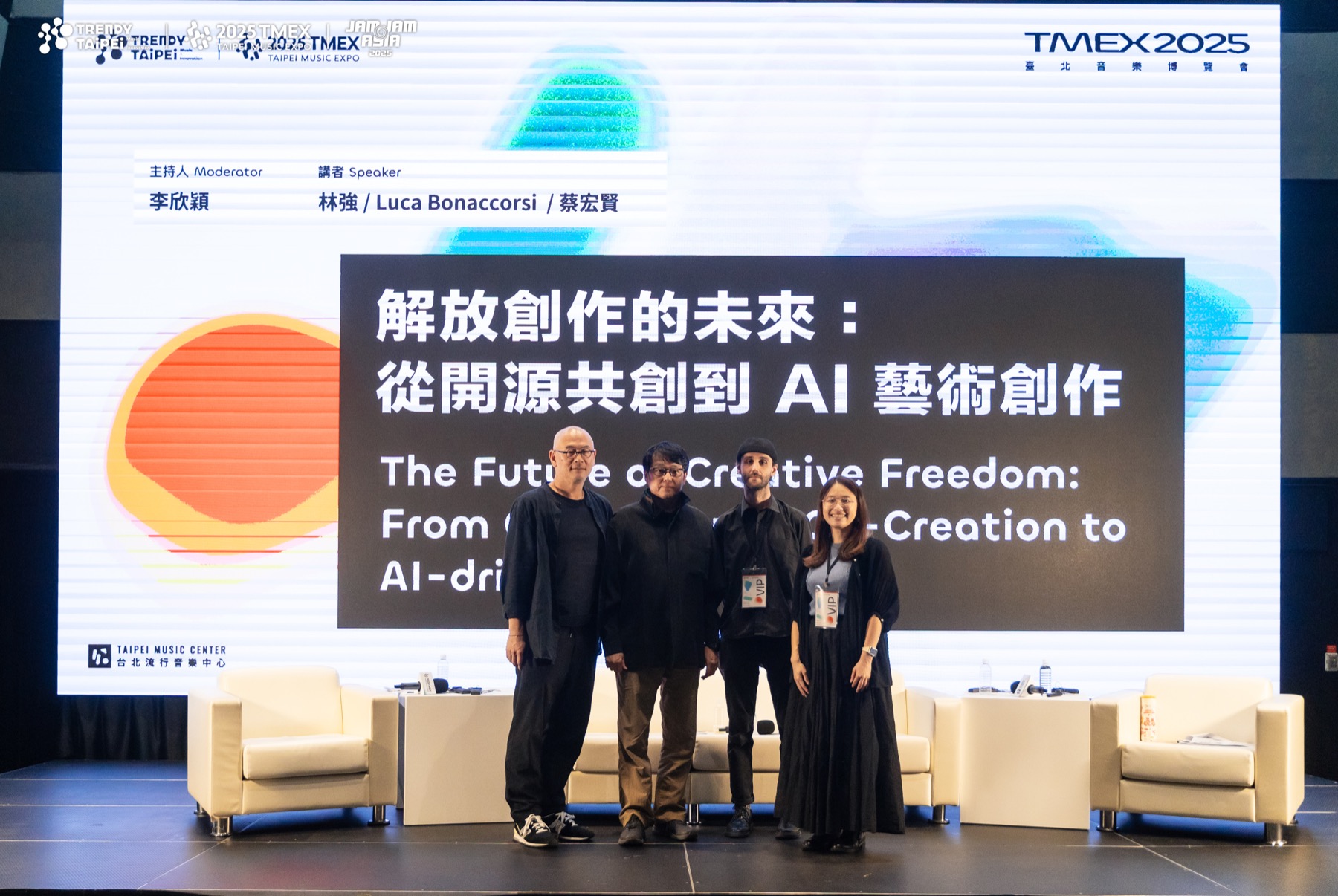
OCF speaking at TMEX on open co-creation and AI art
OCF speaking at TMEX on open co-creation and AI art. Photo: Taipei Music Center
Code for Japan successfully crowdfunds the Japanese edition of OpenStarTer Village
Code for Japan successfully crowdfunds the Japanese edition of OpenStarTer Village. Image: CAMPFIRE
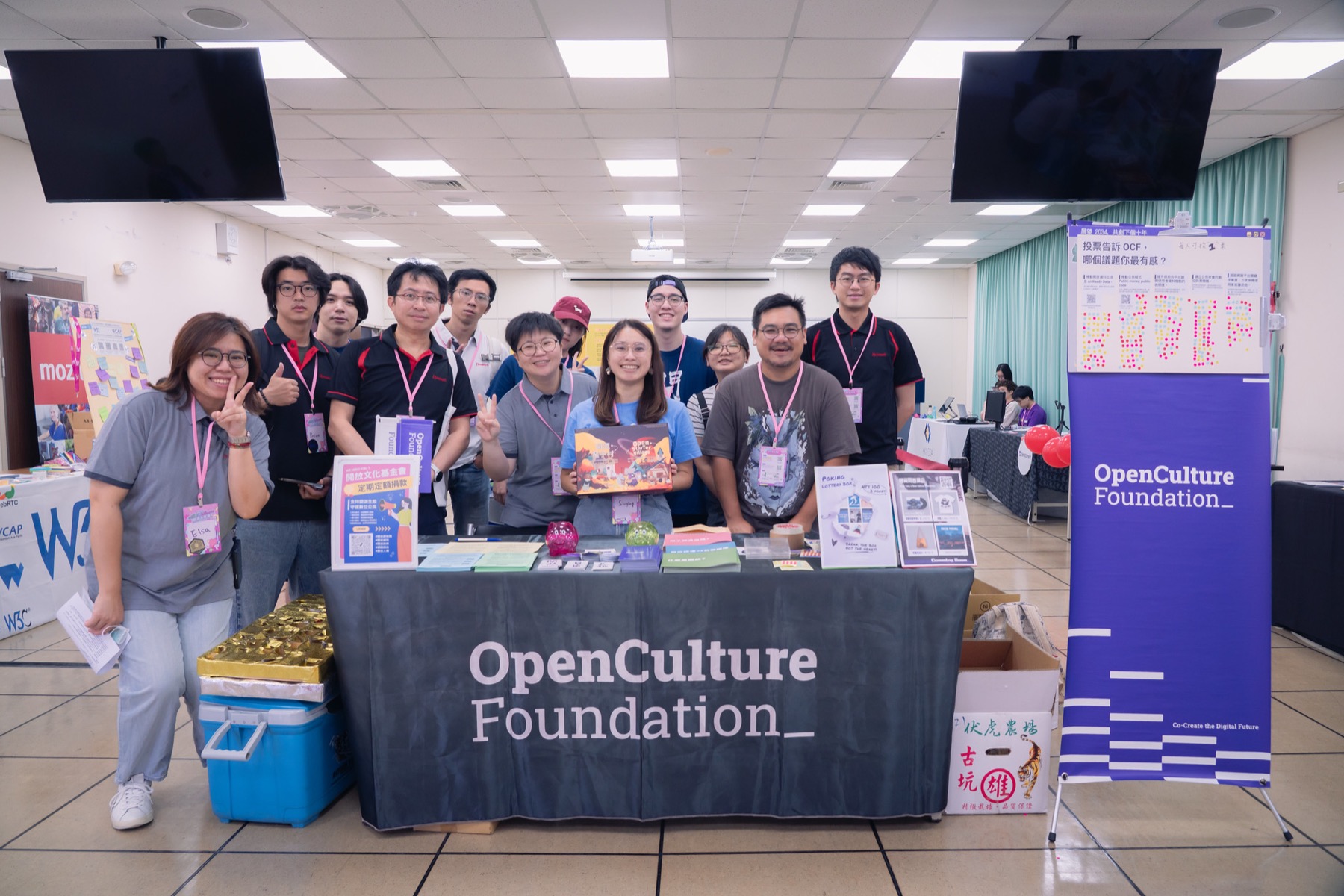
OCF booth promoting open source at COSCUP 2025
OCF booth promoting open source at COSCUP 2025. Photo: CC BY-SA COSCUP

Notes

If I compare this to school life, OCF feels like a student council for the digital world. They support the open-source ecosystem, use an easy-to-understand board game like OpenStarTer Village to welcome newcomers, help people who do not write code understand open-source collaboration, and even work across art and music to help more people experience the open-source world.

It makes me feel that the digital world is not only cold technological competition. It is full of mutual support. Through the bridges OCF builds, we can solve problems together and meet all kinds of brilliant people beyond the screen.

OCF Annual Milestones

700KNearly 700,000 people reached through social media and newsletters
50+More than 50 events and talks organized
6Six international trips and participation in more than 30 domestic policy and international conference meetings
4646 Taiwan-based open-source communities supported

Community Partner Milestones

OCF was founded to support Taiwan's open-source communities. We continue to believe that openness and collaboration are the forces that move society forward.

In 2025, we were fortunate to work with more than 46 communities and witness partners deepen their work and practice their ideals in their own fields. This timeline records some of our community partners' notable achievements in 2025. Together, they show the creativity of Taiwan's open-source ecosystem.

Taiwan BSD Community

  • The internship program trained students to participate in the FreeBSD project. Student Sheng-Yi Hung became a committer and published a paper.
  • Two members, Yen-Hao Wang and Chun-Cheng Yeh, had papers accepted for presentation at AsiaBSDCon 2026.

Creative Commons Taiwan

  • Published 12 Creative Commons articles and commentaries and joined 12 AI expert meetings at the Ministry of Digital Affairs and other agencies.
  • Promoted CC's recommendations for public-private collaboration in the generative AI era, helping local audiences understand public-interest and respect mechanisms such as CC Signals.

Cloud Native Taiwan User Group

  • Kubernetes Community Days Taipei brought together more than 100 participants.

Cofacts

  • Held six fact-checking collaboration trainings with 132 total participants. The series has now reached 50 events and remains open for participation.

COSCUP

  • Co-organized the conference with RubyConf TW, attracting more than 3,200 participants, 48 international speakers, and 17 international booths to Taiwan.
  • Visited FOSDEM, FOSSASIA, OSC Nagoya, and other international conferences for in-person exchange, and was listed by the Open Source Initiative among the top 50 open-source conferences.

g0v jothon

  • Held six hackathons, one Dark Magic Defense hackathon, and four court observation hackathons.
  • g0v School marked its fifth anniversary and launched a digital empowerment curriculum.

Hsinchu Coding Serfs Meetup (HCSM)

  • The community came back to life.
  • Co-organized World RISC-V Day with RISC-V@Taiwan and NYCU Software Developer Club, with more than 200 participants.

JCConf Taiwan

  • For Java's 30th anniversary, JCConf focused on Java 25 LTS, attracting more than 450 developers and 10 companies, with over 30 sessions covering AI Agent implementation, cross-platform KMP strategies, next-generation GC tuning, and more.

OpenStreetMap Taiwan

  • Continued monthly OpenStreetMap x Wikidata Taipei meetups.

PyCon Taiwan

  • Expanded to five tracks and launched the Young Inspires forum, increasing participation among younger generations and reaching the largest scale in the conference's history.

PyLadies Kaohsiung

  • Held Python beginner workshops in northern and southern Taiwan, creating women-centered spaces for programming and AI-assisted coding.

Ruby Taiwan

  • Co-organized the annual conference with COSCUP and invited Ruby creator Yukihiro Matsumoto and the mayor of Matsue to participate.

sciwork

  • Held monthly scisprint development sprints, plus a mid-year seminar and year-end conference, catalyzing cross-disciplinary technical exchange and community development.

SITCON

  • SITCON continued bringing student volunteers and contributors together to organize events and invest in the community, attracting more than 1,200 participants to the annual conference.

System Software Goes Global

  • Participated in Open Source Summit North America, presenting three sessions on the work of eight young contributors, including RISC-V, machine learning performance, and Valkey multithreading.

vTaiwan

  • Worked with TWNIC on a dynamic deliberation model using AI verification to prevent fraud.
  • Published AI deliberation research with Google Jigsaw and People Powered, and held 50 Wednesday meetups and Facing the Ocean hackathons.

Mozilla Taiwan Community

  • Held 197 events with 1,702 participants, including more than 200 first-time visitors.

Twinkle AI

  • Worked with APMIC and the National Center for High-performance Computing to build the first compact reasoning model, F1, and release the corresponding reasoning dataset.
  • Built a textbook-quality Traditional Chinese pretraining corpus with Taiwan Mobile and released the next-generation T1-4B model, setting a new milestone for the Traditional Chinese AI ecosystem.

FreeSEED

  • Open-sourced the gpt-oss-120b model supporting Traditional Chinese reasoning.

Taiwan Network Operators' Group (TWNOG)

  • Focused the year on strengthening network resilience and security, exploring RPKI deployment, DDoS protection, and network automation to support a more stable and secure Taiwan internet interconnection ecosystem.

opensource4you

  • Became Taiwan's first official chapter of the Apache Software Foundation (ASF), contributing thousands of commits and becoming a core organization for multiple international open-source technologies.
  • Received recognition from the mayor, while the community reached more than 550,000 monthly reads and over 30,000 discussions.

WordCamp Taiwan

  • Held the annual conference in Kaohsiung for the first time, bringing together more than 250 open-source enthusiasts to discuss website building, design, and content marketing trends.

Guangfu Volunteers

  • Since the Matai'an incident, the community independently developed information systems that integrated volunteer maps and supply matching to improve collaboration efficiency in disaster areas.

Global Connections

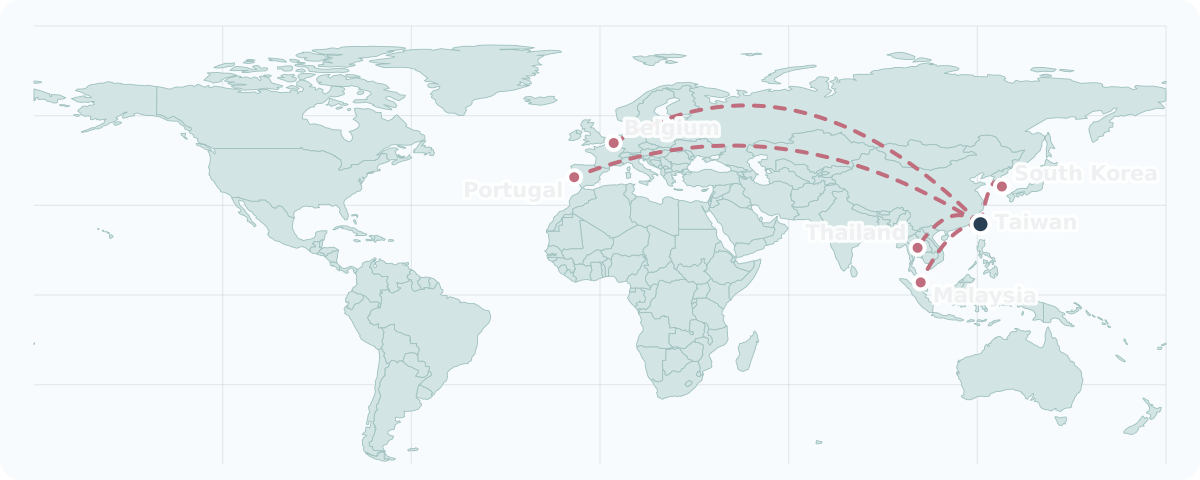
In 2025, OCF continued bringing Taiwan's experience to the world and bringing global trends in open technology, digital rights, and internet freedom back to Taiwan.

World map of OCF's 2025 global connections, marking Taiwan, Belgium, Portugal, South Korea, Thailand, Malaysia, and connecting routes
Taiwan

In February, during the RightsCon session “The Watchful Eyes of Civic Community: Taiwan's Digital Security Support from Personal to Regional Practices,” OCF invited four civic representatives to discuss practical solutions for human rights defenders in East Asia facing increasingly severe digital threats.

OCF co-hosted two RightsCon satellite events: “Mutual Aid, Resonance, and Amplification: Digital Rights Voices from Taiwan and East Asia” and a discussion with domestic and international experts on digital privacy policy and digital gender-based violence. At the internet freedom, censorship, and anonymity workshop, OCF invited Tor, Tails, and OONI to share global network measurement practices and ways to bypass internet censorship.

OCF invited three Taiwanese groups, Citizen Congress Watch, Doublethink Lab, and Taiwan Equality Campaign, to co-host a three-day booth at the RightsCon Community Village, sharing work on technology and digital issues and showing the energy of civil society.

South Korea

In September, OCF attended the Global Privacy Assembly in Seoul and shared Taiwan's civic community contributions to privacy and digital rights protection at the forum “Advancing Asia-Pacific Digital Consumer Dialogue.”

Belgium

In February, OCF traveled to Brussels for FOSDEM, sharing Taiwan's community collaboration model and tools such as OSCVPass and OPASS with global open-source advocates through booths, sessions, and lightning talks.

Portugal

In September, OCF joined international partners working on digital technology and human rights at Global Gathering, continuing to share Taiwan's digital rights advocacy efforts and help Taiwan's experience contribute to the international community.

Thailand

In November, OCF joined International Civil Society Week hosted by CIVICUS to discuss strategies for defending democracy in the Asia-Pacific region amid expanding digital authoritarianism and shrinking civic space.

Also in November, OCF was invited to Bangkok for the Asia Democracy Assembly, where it shared Taiwanese civic groups' experiences with cross-border digital attacks and OCF's proposed defense strategies with civil society leaders, policymakers, and international partners from across Asia.

Malaysia

In May, OCF joined the Digital Rights Asia-Pacific Assembly (DRAPAC) hosted by EngageMedia in Kuala Lumpur, introduced its Digital Security Support Program for civil society groups at Open Tech Camp, and held in-depth exchanges with security trainers from different countries on supporting human rights defenders more effectively in high-risk environments.

2025 Financial Report

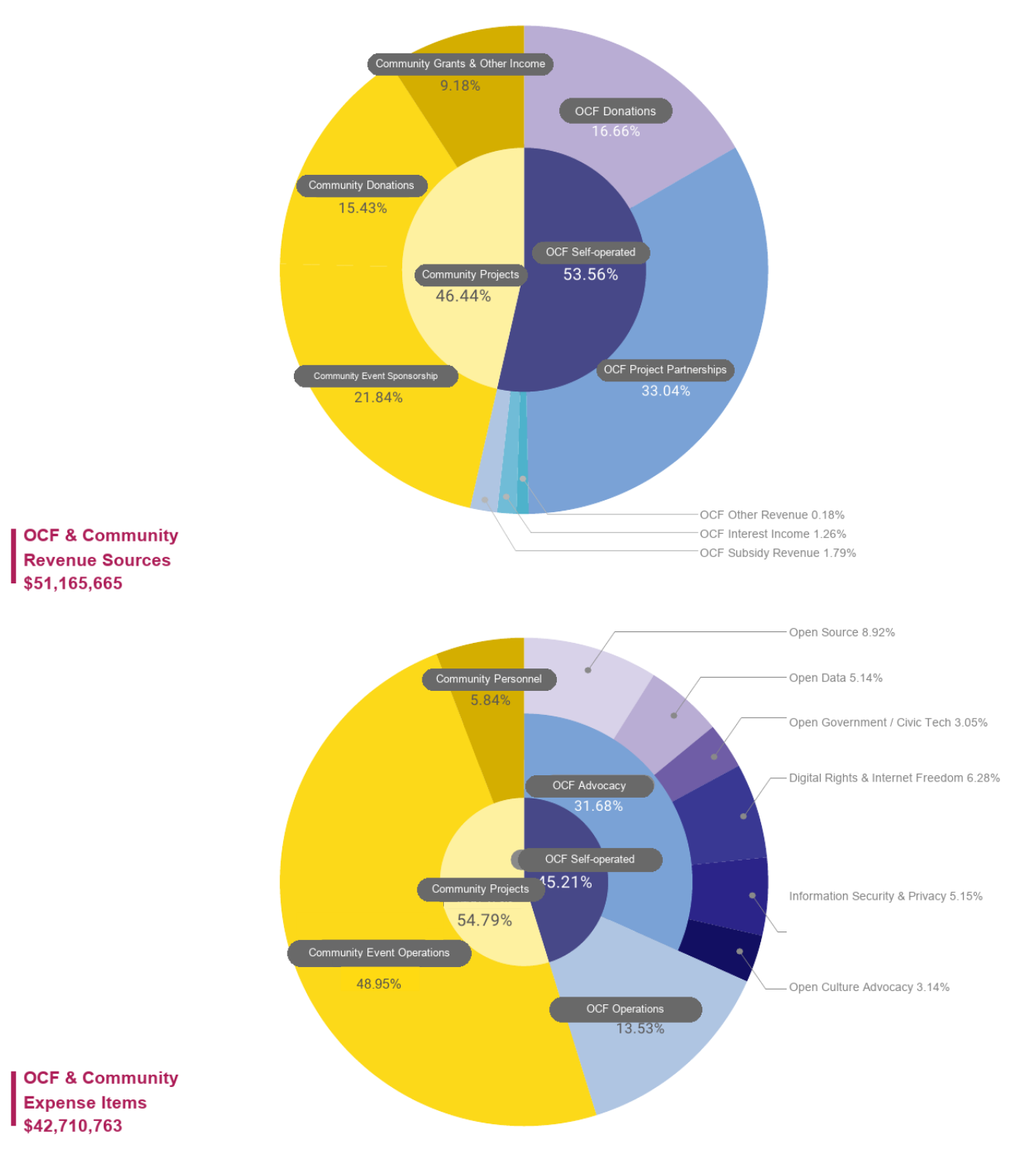
2025 financial report pie charts for income and expenses

A girl using a laptop on the closing page

財團法人開放文化基金會 (OCF)
電話:+886-2-2395-1505
Email:[email protected]
地址:105057 臺北市松山區八德路四段 636 之 1 號