Digital Security Support for CSOs and HRDs in Taiwan
About the Project
The Open Culture Foundation (OCF) launched the Security Makeover Program for CSOs and HRDs to provide long-term digital security support for Taiwan-based civil society organizations and human rights defenders. Over one year, OCF worked with six high-risk organizations to review their tools, accounts, data, and workflows, and to develop practical security policies or guidelines that teams could sustain beyond the project period.
The program responds to increasingly complex digital threats against civil society. For CSOs and HRDs, digital security is essential to protecting sensitive information, maintaining trust with partners and communities, and keeping their work running safely. Yet many groups face limited staff capacity, time, and technical resources, making it difficult to turn security awareness into daily practice.
Through this program, OCF supported six organizations in developing security policies or guidelines at different levels of maturity. The project produced three public reports and one learning resource, documenting key findings, the accompaniment model, and practical lessons for other civil society groups.
OCF also helped intercept a cyberattack targeting civil society, in which attackers impersonated a participating human rights organization to send a convincing phishing email to its partners. The case was referred to Civil Society Cyber Shield (CSCS) for analysis, and the attack was stopped before causing infection. The experience showed that effective protection requires long-term trust, timely reporting, and collaboration between civil society groups and technical communities.
Reports & Resources
The project produced three public reports and one learning resource. Together, these outputs document digital threat trends, the Security Makeover Program experience, practical learning materials, and a real-world cyberattack case, offering useful insights for NGOs and digital security practitioners working to strengthen civil society’s digital resilience.
- Digital Security Mapping for HRDs in Taiwan: Preliminary Results (2024)Based on 35 survey responses and 3 in-depth interviews, this report maps key digital threats facing Taiwan-based CSOs and HRDs, including phishing, online harassment, account compromise, and infrastructure attacks. It highlights why resource-limited CSOs need long-term digital security support.
- Safeguarding Advocacy: A Security Makeover Program (SMP) for CSOs and HRDs (2026)This report documents OCF’s one-year Security Makeover Program with 6 high-risk CSOs and HRD groups. It shares how long-term accompaniment helped organizations review daily digital practices and develop practical security policies or guidelines.
- The Cost of Trust: Lessons from a Cyberattack on Taiwan-Based Human Rights Defenders (2026)This report examines the MAK case, a real cyberattack in which attackers impersonated a Taiwanese human rights organization to target its partners. It shows how civil society trust networks can be exploited—and how timely reporting, OCF coordination, and CSCS technical support helped stop the attack before infection.
Digital Security Mapping for HRDs in Taiwan
2024 preliminary research: full report in English, plus a Traditional Chinese summary synthesizing findings from 35 questionnaires and three in-depth interviews.
Summary (zh-TW) Full report (English)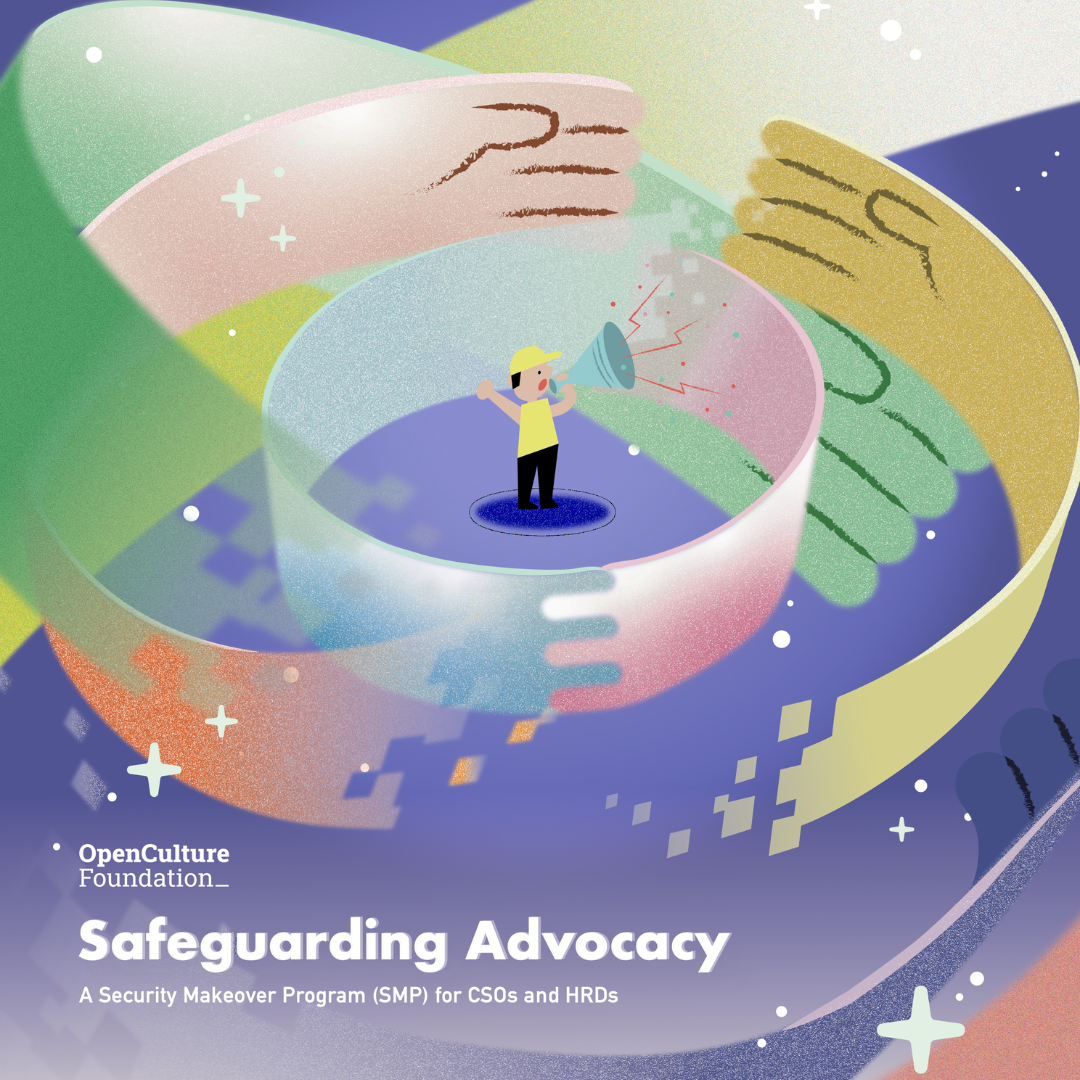
Safeguarding Advocacy
The project's final report, summarizing the Security Makeover Program (SMP)'s service model, implementation experience, and recommendations for CSOs and HRDs.
Traditional Chinese (zh-TW) English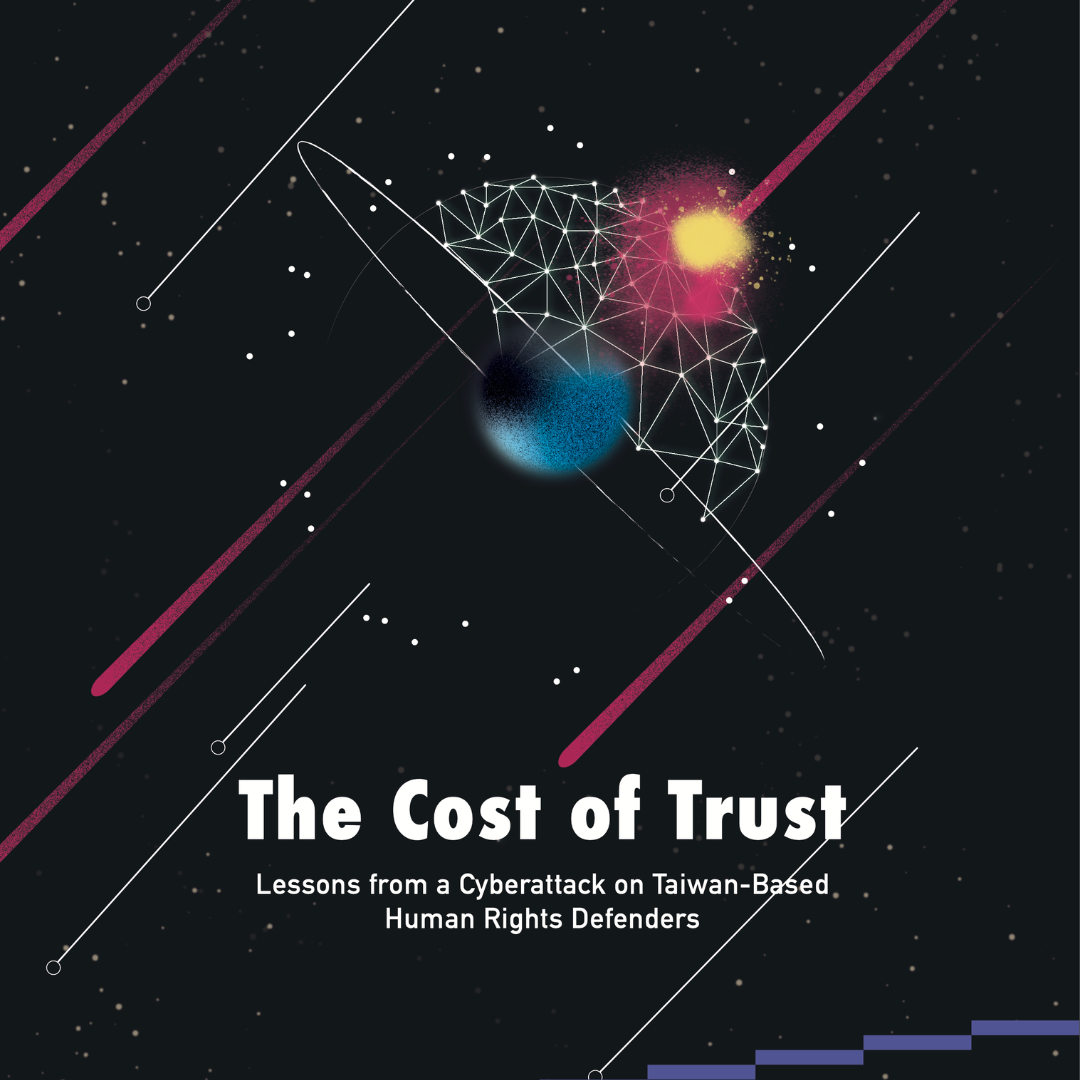
The Cost of Trust
A case study documenting a cyberattack against Taiwan-based human rights defenders — attack patterns, defensive response, and lessons learned.
Traditional Chinese (zh-TW) English
Shield of Self-Defense (SSD)
Beginner-friendly cybersecurity learning materials for CSOs and HRDs, covering threat modeling, device security, authentication, encrypted communication, and more. Licensed under CC BY 4.0.
Visit SiteIf you are interested in learning more about the toolkit and the related materials, please contact Open Culture Foundation via [email protected].